A short walk on a familiar, managed path and a remote day hike need different preparation. This research-based guide helps organize a daypack after the route and conditions are understood. It is a planning checklist, not a substitute for local instructions, practical skills, or choosing an outing suited to the people going.
The short version
- Choose the route and check local conditions before choosing the load.
- Pack essential systems, including options for delays and changing weather.
- Keep navigation, layers, water, and light accessible rather than buried.
Write a small route brief
Record the starting point, intended route, expected finish, and an earlier option for turning back. Check the land manager's current alerts, access, weather, and water information. The National Park Service recommends planning for the specific place and activity, including telling a trusted contact about the trip. An attractive distance on a map does not describe terrain or conditions.
Decide what would make you shorten or cancel the outing before leaving. Build a plan around the least prepared member of the group, and agree how you will stay together. If essential route information is missing, choose an alternative you can assess rather than using more equipment as a substitute for understanding the journey.
Think in systems, not a shopping list
The NPS Ten Essentials framework covers navigation, sun protection, extra clothing, light, first-aid supplies, fire, repair tools, extra food, water, and emergency shelter. These are preparation categories, not a promise that one identical kit fits every outing. Adapt them to the location, conditions, and activities, including applicable fire restrictions.
For each category, ask what the item is for and whether you know how to use it. A downloaded map needs a usable device and a backup plan. A rain layer needs to be reachable when conditions change. Equipment that stays sealed because no one understands it adds weight without completing the intended system. Arrange any needed training before choosing a more demanding route.
Build around access and protection
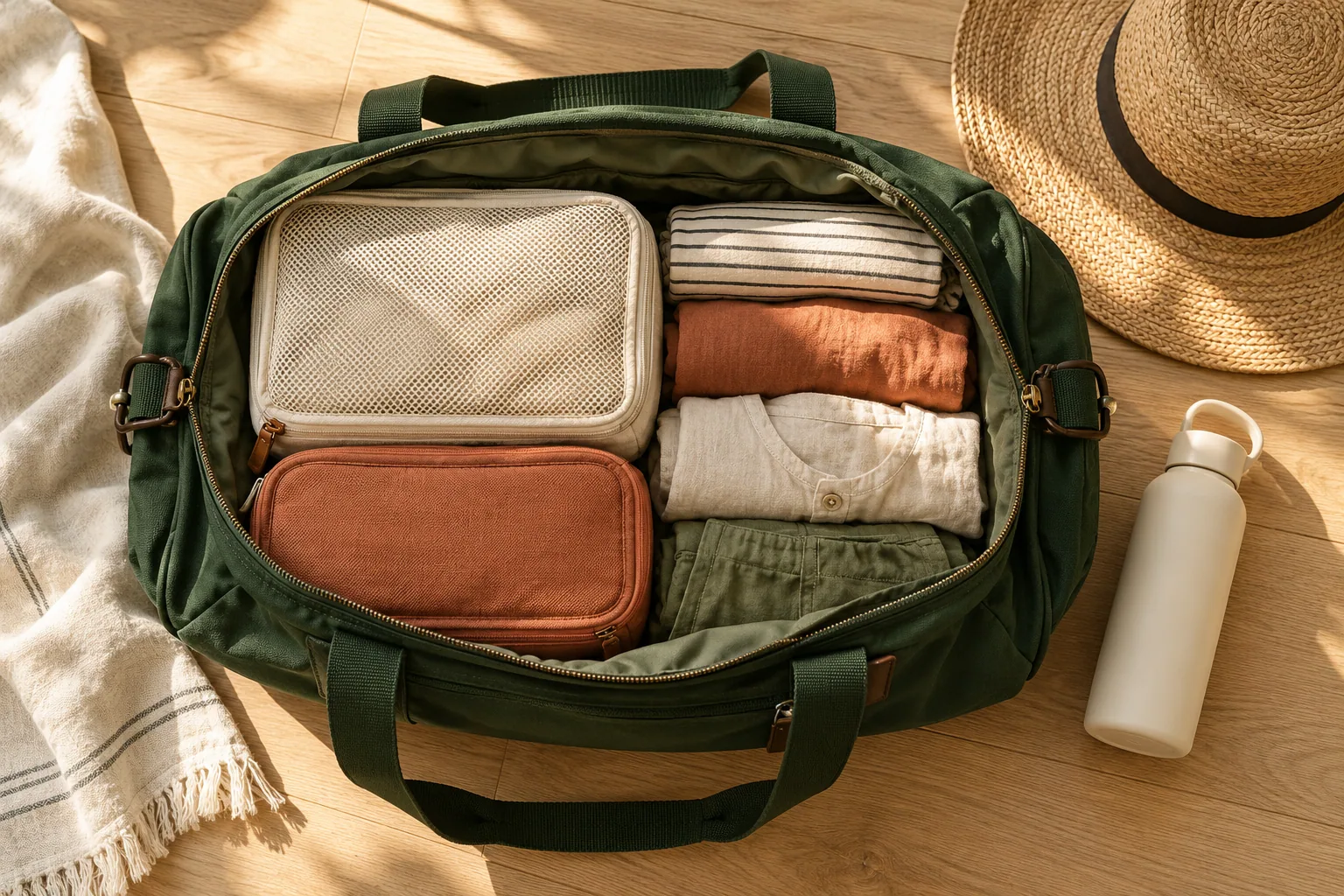
Put frequently used items in predictable places. Keep water, a snack, the route information, and an extra layer accessible. Place items you hope not to need in a clearly identified group, not scattered through hidden pockets. Protect the things that must stay dry using a suitable inner bag or container, following the equipment's limitations.
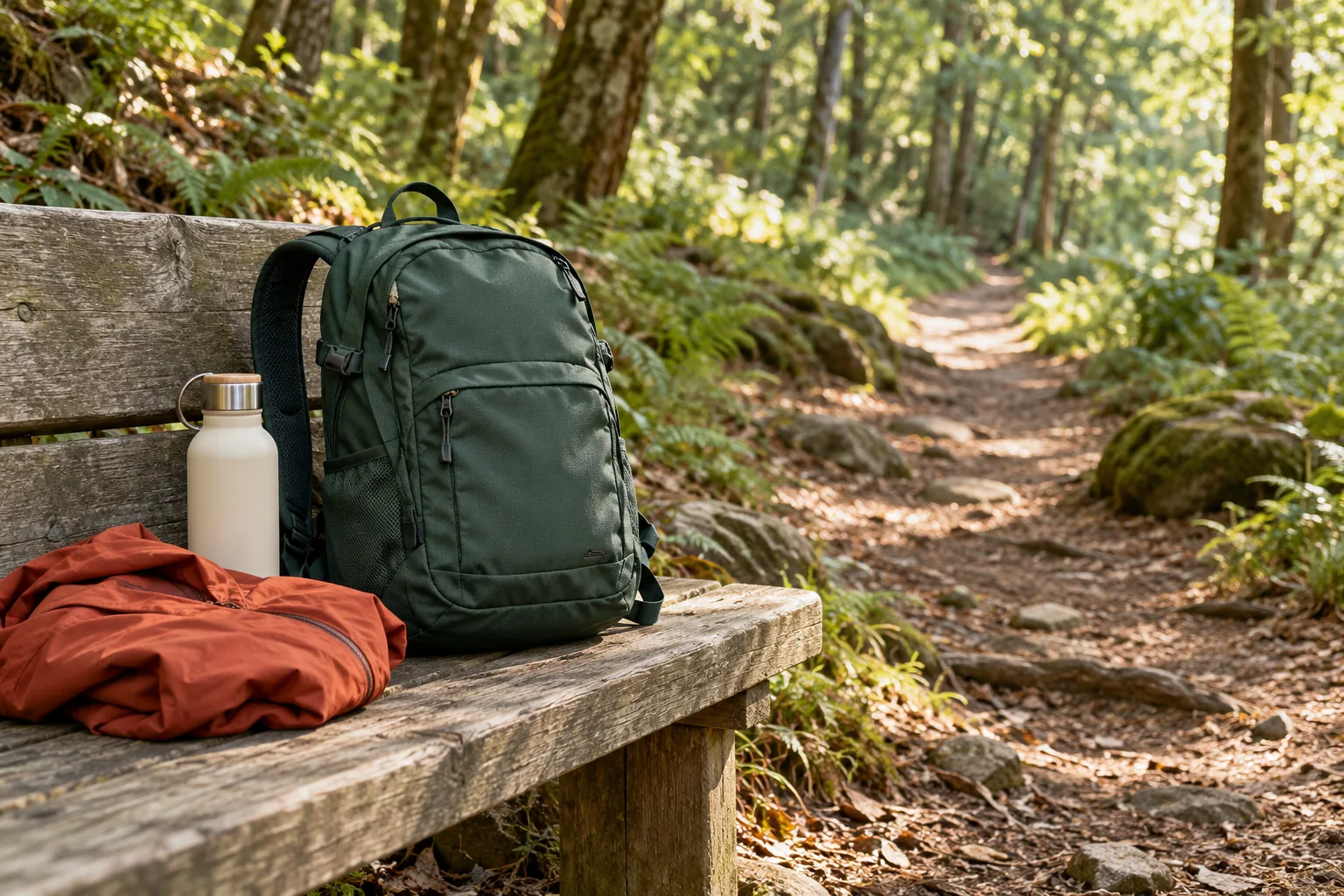
Load the pack with the actual supplies and adjust it before departure. Walk around, bend, and reach for water without emptying the main compartment. Notice pressure points, movement, and dangling straps. Choose capacity by the complete load; the smallest pack is not helpful if it forces a useful layer to be left behind or attached insecurely outside.
Plan for a delay without overbuilding
Ask how your plan changes if the walk takes longer than expected. Does the group still have suitable food, water arrangements, clothing, navigation, and light? Avoid treating a phone's remaining battery as the whole contingency plan. Check route-specific guidance rather than relying on a universal water quantity or an assumption that water sources will be available.
Balance preparedness with a route you can comfortably manage. If the required equipment makes the outing impractical, choose an easier outing instead of silently dropping important items. A city-to-park stroll does not need to become an expedition, but a remote trail should not be packed as if another shop or transport stop is guaranteed.
Reset the bag after the walk
Remove food waste and wet items, refill used supplies, and note what was difficult to find. Keep a short route-specific packing note for the next outing. Review it against new conditions each time; a successful summer trip does not establish that the same equipment suits a colder or more isolated route.
Your next-step checklist
- Read the destination's current conditions and restrictions.
- Leave a route and expected-return plan with a trusted contact.
- Review essential systems and the skills each item requires.
- Check water arrangements, weather layers, navigation, and light.
- Try the loaded pack and agree when to shorten the outing.
Sources & further reading
Reference material used for this research guide. Requirements and product documentation can change; check the relevant source before acting.
This is a research-based guide, not a hands-on product review. It contains no affiliate shopping links. Read our editorial approach.